
Buying and Selling Domain Names: A Real-World Guide to Finding, Pricing, and Selling Safely
Buying a domain name and selling it later for more is the basic idea behind domain flipping. It sounds simple because it is simple. The hard part is that most domains won’t be worth much, and a lot won’t sell at all.
The people who do okay with it usually start the same way: they look at what people already type into Google. Those searched terms can hint at what businesses want, what customers want, and what words feel familiar. Then they try to grab a clean name that matches that demand, without getting carried away.
This guide covers what makes a domain valuable, how to find names without overpaying, how to price and negotiate, and how to sell without getting scammed.
How domain names make money (and when they don’t)
A good domain is like a storefront sign. If it’s clear, easy to remember, and fits what you sell, it can save time and money. If it’s confusing, people walk past.
Domains make money when they help someone get one of these wins:
- Trust: A clean, direct name looks more legit.
- Clarity: The name tells you what the business does.
- Recall: People can remember it after hearing it once.
- Demand: There are real buyers in the market for that wording.
Domains don’t make money when the “buyer pool” is tiny. A domain might sound clever but still have no natural buyer. Another common issue is pricing fantasy. If you buy a name expecting a big sale but the term has no commercial use, it becomes a renewal fee you keep paying.
Buyer types matter, too:
Business owners want a name that fits their offer and doesn’t scare customers off.
Marketers care about clickability, brand fit, and message clarity.
Investors think in inventory terms, risk, and how long a sale might take.
What makes a domain valuable to buyers
Value is mostly about how the name feels when someone sees it in a search result, hears it on a podcast, or tries to type it from memory.
Here’s what buyers tend to pay for:
Short length: Fewer characters usually means fewer mistakes.
Clean spelling: If you have to explain it, you’re already losing.
Good sound: Some names just “say well” out loud.
Brand feel: It can be made into a logo, an email, a product.
Common words: Real words often beat made-up spellings.
Local intent: City plus service names can be strong if the term is normal (think “AustinPlumber”).
Commercial intent: Words tied to spending (repair, quote, pricing, insurance, loan) tend to attract buyers.
Extensions: why .com still leads (and when others sell)
For many buyers, .com is the default. It’s habit. It’s trust. It’s the one people type without thinking.
That doesn’t mean other extensions can’t sell. They can, when the match is obvious:
- .io: common with software and developer tools
- .ai: popular with AI products and agencies
- Country codes: sometimes strong for local businesses in that country
Still, if you’re new, it’s safer to treat non-.com names like harder mode. They can sell, they just usually need a clearer reason.
Red flags that hurt domain value
A few traits can sink a domain even if it’s “close” to a good idea:
- Hyphens that split the name in odd ways
- Numbers that people won’t remember (or won’t know if it’s “4” or “four”)
- Weird spelling to force availability
- Confusing meaning or too many words
- Anything that looks like a typo of a famous brand
The three most common ways people profit from domains
Most domain profit fits into three buckets. Each has a different patience level.
1) Flipping (buy low, sell higher)
You buy a name you think has immediate buyer interest, then list it or pitch it.
Example: You register a simple service domain tied to a growing niche, then sell once a company wants to rebrand.
2) Holding (buy and wait)
You buy with the idea that demand will grow, or that the right buyer takes time.
Example: You buy a domain that matches a new tech category, then wait until more startups enter the space.
3) Leasing or rent-to-own (monthly payments)
Instead of one sale, you set a monthly price, sometimes with an option to buy later.
Example: A small business can’t pay a lump sum, but can handle monthly payments while they build cash flow.
Flipping is faster but pickier. Holding takes patience. Leasing can be steady, but you need contracts and clear terms.
Finding good domains to buy without overpaying
If domain buying feels like a casino, it’s usually because someone is buying on emotion. A better approach feels closer to shopping with a list.
Start with two rules:
- Set a budget you can lose. Assume some buys won’t work.
- Don’t “fall in love” with a name. There’s always another one.
A simple beginner workflow looks like this:
- Pick a niche (local services, software tools, hobbies, health, finance)
- Build a list of ideas from searched terms
- Check availability, then narrow to your best 10 to 20
- Run quick safety checks
- Buy only the ones that still look clean after research
Start with ideas people already search for
The easiest way to brainstorm is to start with phrases people already use, then tighten them into clean domains.
Good sources of ideas:
Products: “air purifier,” “running shoes,” “meal prep”
Services: “roof repair,” “tax filing,” “bookkeeping”
Problems: “back pain relief,” “stuck drain,” “slow computer”
Hobbies: “home espresso,” “3D printing,” “pickleball”
Local services: “Miami + dentist,” “Denver + movers”
You’re looking for words with buyer intent, not just curiosity. Intent shows up in terms like:
repair, quote, near me, install, pricing, best, service, company, book, order
Once you have a phrase, try to make it shorter without making it weird. Cut filler words first. Avoid stuffing in extra words just to get a .com.
A clean name usually follows one of these patterns:
- Brandable single word (harder to find, can be strong)
- Two common words that fit together (easy to understand)
- Service plus location (works best for local lead-gen buyers)
When you brainstorm variations, keep them natural. If you have to explain why two words belong together, the buyer will hesitate.
Where to buy domains (registrars, aftermarket sites, expired names)
There are two main ways to buy:
Registering a new domain means you’re the first owner. You pay a standard registration fee.
Buying an existing domain means someone already owns it, or it expired and is being resold. This includes aftermarket listings and expired auctions.
Each route has its own risks.
Regular registration (new domains)
Pros: usually cheap, simple, clean ownership history.
Watch for: renewal prices (some names renew higher), and premium name labels.
Expired auctions and closeouts
Pros: you can find strong names with history.
Watch for: bidding wars, auction fees, and the fact that you might get attached to winning.
It’s easy to overpay at auction because the timer and competition mess with your judgment. Decide your max price before you bid, then stick to it.
Private sales
Pros: sometimes you can negotiate a better deal.
Watch for: scams, unclear ownership, and people who waste time.
If someone won’t use escrow or can’t prove control of the domain, walk away.
Quick checks before you buy (so you don’t buy trouble)
Domains can come with baggage. A few quick checks reduce the chance you buy a problem.
Trademark risk
Search the exact name plus the industry. If it’s a clear brand name tied to a company, don’t touch it. Avoid anything that looks like “BrandNameSupport” or “BrandNameDeals.” Those can lead to disputes.
Past use
If the domain used to host spam, fake downloads, or thin affiliate pages, it can be harder to use or sell. A basic history check can show old versions of the site and how it was used.
Backlinks and penalties (keep it simple)
If a domain has a pile of junk links, it may have been abused. You don’t need to be an SEO expert to be cautious. If the backlink profile looks unnatural, skip it.
Typos of big brands
Even if it feels like an “easy flip,” it’s not worth it. Those names attract legal trouble and shady buyers.
A safe beginner mindset is boring on purpose. Clean names, clear meaning, low drama.
Pricing and negotiating like a real seller
Pricing domains is part research and part psychology. If you price too low, you leave money on the table. If you price too high, you don’t get offers, and the name sits for years.
A calmer way to do it is to set ranges and decisions in advance:
- Your target price (what you want)
- Your floor price (the lowest you’ll accept)
- Your “happy to keep it” price (the point where you’d rather hold)
That last number matters because renewals add up. If you wouldn’t be happy holding it, you probably paid too much.
How to set a fair price using comps and demand
“Comps” are comparable sales. It’s like real estate. You look at names that sold and ask, “How close is mine?”
When you compare, keep it basic:
- Length and simplicity
- Exact words used (common words often do better)
- Extension (.com vs others)
- Industry demand (some markets spend more)
- Brandability (does it sound like a business?)
Then look for demand signals that suggest buyers exist:
Active businesses using similar names: If you see several companies using close versions, that’s a good sign.
Lots of ads for the term: If advertisers spend on it, money is flowing in that space.
Clear commercial use: The term fits a product or service people pay for.
A simple pricing approach:
Target price: what you’d be happy with today.
Floor price: what makes it worth your time after fees.
Hold price: the number that makes you say, “I’m fine keeping this.”
If you only have one number in your head, negotiations get messy fast.
Negotiation basics that keep deals moving
Most domain negotiations die because one side makes it weird. Keep it plain and respectful.
A few message habits help:
Keep replies short: Two to four lines is often enough.
Ask what they plan to use it for: It helps you judge seriousness and budget.
Don’t reveal your lowest price early: If they ask, give a range or restate your asking price.
Offer two options: a buy-now price and a payment plan.
If you counter, counter once with a clear number and a reason that doesn’t sound like a story. For example, mention similar sales, the name’s clarity, or the extension. Don’t write a novel.
Walk away when:
- They push you to move off-platform fast
- They avoid escrow
- They use pressure tactics or odd excuses
- Their offers never improve and they won’t meet your floor
Also, don’t bid against yourself. If they go quiet, wait. Silence is normal.
Selling your domain safely (and getting paid)
Selling is where beginners get nervous, and it’s fair. Domains are easy to transfer, and that makes them a target for scams.
The good news is you can reduce risk with a boring process and a refusal to rush.
Where to sell and how to write a listing that works
You can sell in two main ways:
Marketplace listings bring inbound buyers. This is slower, but easier.
Direct outreach means you email businesses that might want the name. This can work, but you need restraint and good targeting.
A listing should answer the buyer’s silent questions fast.
Include:
- A clear title that matches the domain
- What the name fits (industry, use case)
- Extension and basic facts (short, easy to spell)
- Price or “make offer” (pick one, don’t confuse people)
A small but powerful move is a simple for-sale page on the domain itself. If someone types it in, they should immediately see it’s available and how to contact you. Keep it clean: one message, one contact method, and a price if you have a fixed number.
Escrow, transfers, and avoiding common scams
Escrow is a middle step that protects both sides. The buyer pays escrow, escrow confirms the funds, you transfer the domain, then escrow releases the money to you.
A safe basic process looks like this:
- Agree on the price and terms in writing (even email is fine).
- Start the transaction in escrow.
- Buyer sends payment to escrow.
- Escrow confirms funds are received.
- You transfer the domain to the buyer.
- Buyer confirms they have control.
- Escrow releases payment to you.
If a buyer doesn’t want escrow, that’s your answer.
Common scam signs to watch for
Fake payment emails: Always verify inside the payment platform, not your inbox.
Rushing you: “I need it today” is often a tactic.
Move off-platform requests: They want you outside protections.
Overpaying: “I sent extra, refund me” is a known scam pattern.
Weird agent stories: A third party “broker” with odd steps is usually trouble.
Protect your accounts like they’re bank accounts:
- Use 2FA on your registrar and email
- Use strong, unique passwords
- Keep records of agreements, invoices, and transfer steps
If something feels off, pause. A real buyer will wait.
Conclusion
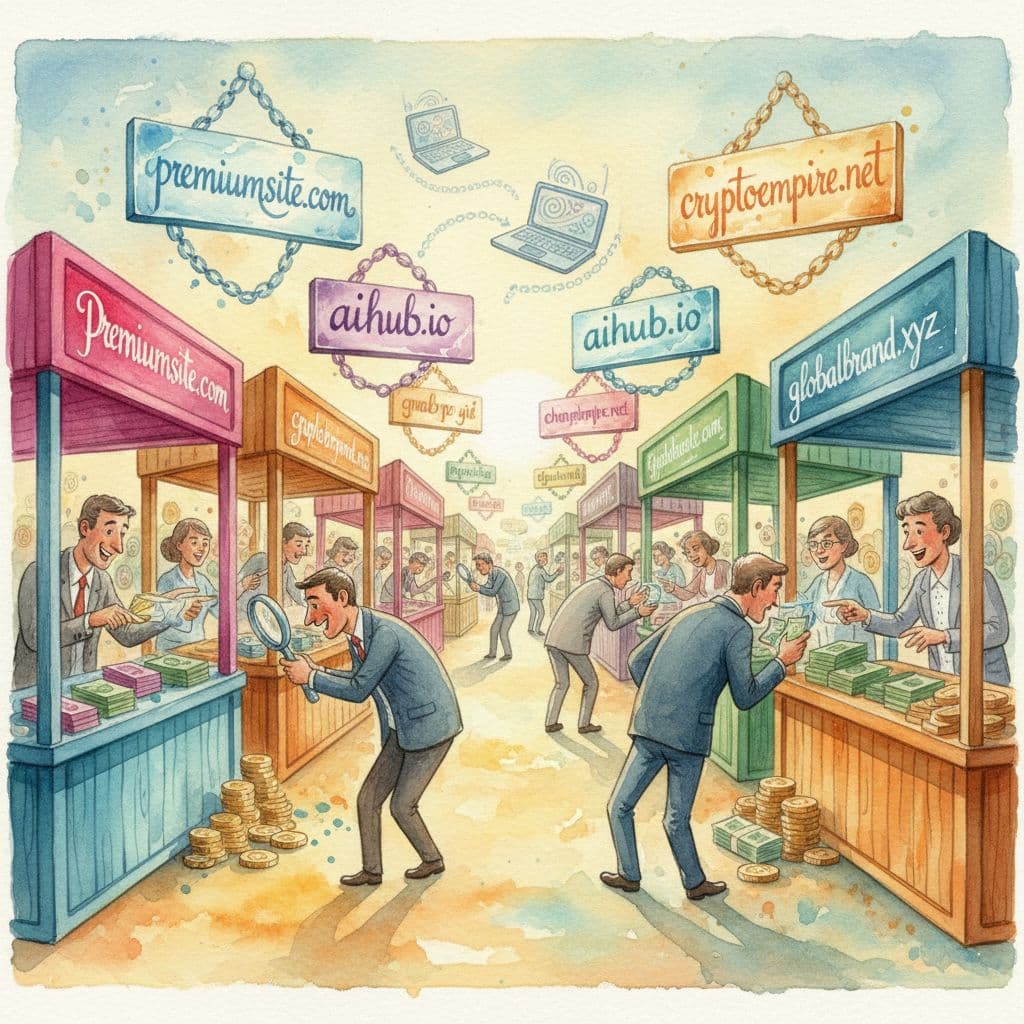
Buying and selling domain names is less like treasure hunting and more like stocking a small shop. You choose items people actually want, you don’t overpay for inventory, and you sell with a process that protects you.
Start simple: pick a niche, build a list from searched terms, buy a few clean names, price them with comps, then sell using escrow and solid security. Track what you bought, what got interest, and what didn’t move. That feedback is where the learning is.
Pick 10 name ideas today, run the pre-buy checks, and don’t spend a dollar until the domains still look clean after research. That one habit will protect your money and your time, and it keeps you focused on quality over hype.